

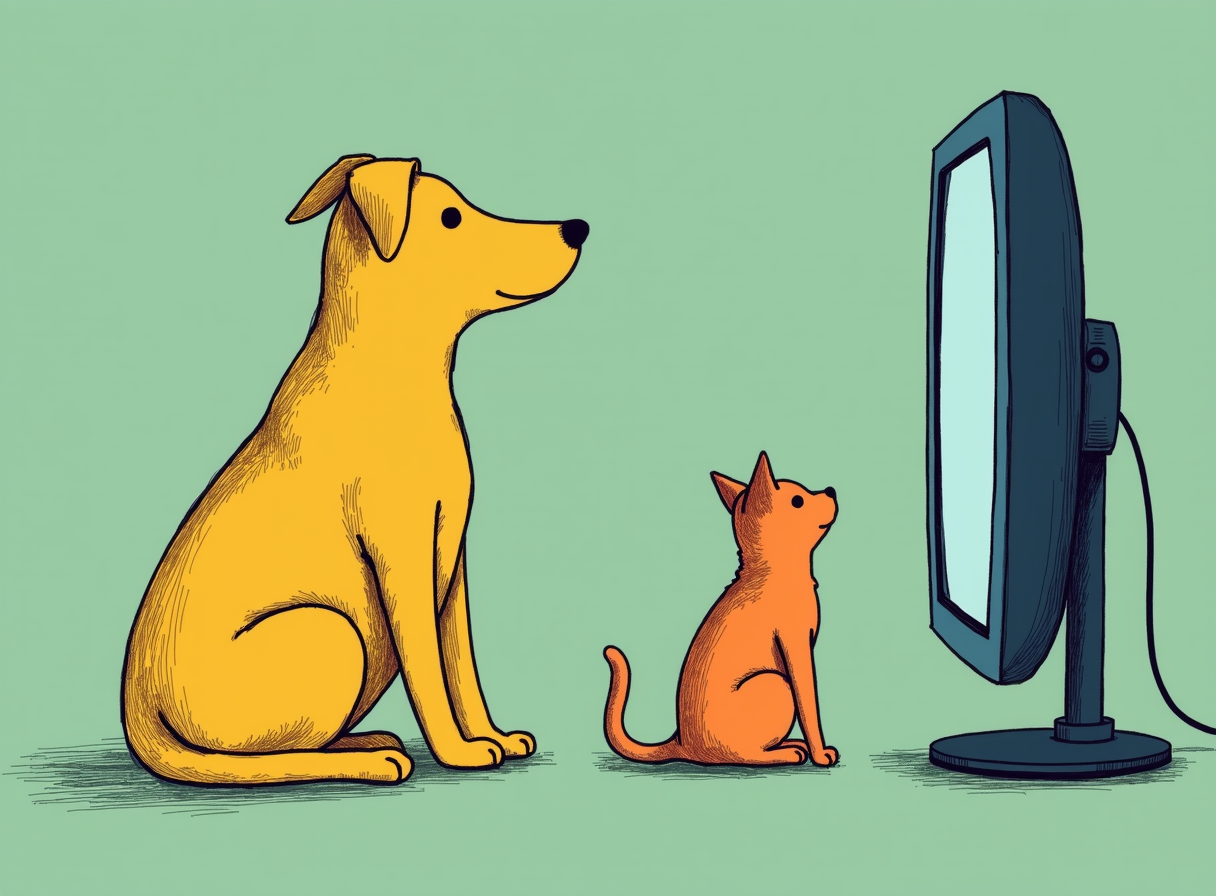
Chinese tech giant Tencent has launched PetTV, a dedicated 24-hour streaming channel on its Tencent Video platform designed specifically for dogs and cats. The channel promises content calibrated to pets' visual and auditory biology — adjusted colour palettes, screen refresh rates, and audio frequencies — aimed at keeping animals company while their owners are away.
According to the 2025 China Pet Industry White Paper by PetData via China Daily, China's urban pet consumption market surpassed 300.2 billion yuan ($41.1 billion) in 2024, up 7.5% year-on-year, signalling that this launch is not a novelty experiment, but a calculated move into one of the world's fastest-growing consumer categories. The question pet owners should ask is not whether PetTV exists, but whether it actually works.
• Tencent Video has launched PetTV, a 24-hour streaming channel available to paid subscribers, engineered around dogs' and cats' sensory perception.
• The channel's scientific claims — tailored colours, refresh rates, and audio frequencies — are made by Tencent itself and are not independently verified in the press release.
• A 2025 peer-reviewed Auburn University study found that while 88.3% of dogs engage with television content, TV responses are highly individualised and a universal soothing content set is unlikely to exist.
• Separation anxiety affects approximately 17% of dogs, meaning the majority of pets may not need or benefit meaningfully from a streaming intervention.
• PetTV will also carry DogTV, the American channel widely regarded as the original evidence-informed pet television service.
Why It Matters: The Loneliness Economy for Pets
Pet ownership is no longer a peripheral lifestyle choice — it is a defining feature of modern urban life, and the commercial world is responding accordingly. According to iiMedia Research via CKGSB Knowledge in 2025, China's pet market is predicted to be worth ¥811 billion ($112.5 billion) in 2025, having grown at three times the rate of its international peers. In 2024, urban pets in China surpassed the number of children under the age of four, according to a Goldman Sachs report cited in the same source. That single statistic signifies the potential for pet welfare products to fulfill a structural role in households where animals are, in effect, replacing children as primary recipients of parental care and spending.
The United States offers a parallel lens. According to the American Pet Products Association via Grand View Research in 2025, U.S. pet industry spending reached $152 billion in 2024 and is projected to rise to $157 billion in 2025. According to the Insurance Information Institute and the American Pet Products Association in 2024, an estimated 71% of U.S. households — approximately 94 million families — own a pet, up from 56% in 1988. When you place PetTV inside this global context, it is not a quirky Chinese internet trend. It is the latest iteration of a worldwide willingness to spend serious money on animal comfort and emotional wellbeing.
The Details: What Tencent Is Actually Offering
PetTV launched on Tencent Video, arguably China's most popular online streaming platform. The channel features curated clips running continuously across a 24-hour loop. Tencent described the service in a WeChat post as a '24-hour happiness hub specially designed for your furry kids.' The company states that the channel's colours, screen refresh rates, and audio frequencies have been adapted to match the sensory biology of dogs and cats, whose vision and hearing differ significantly from those of humans.
The service is available exclusively to paid subscribers of Tencent Video. Tencent's own market research reportedly found that 66% of dog owners leave the television on for their pets when they go out — a figure that suggests the behaviour PetTV is targeting already exists organically. The platform will also air content from America's DogTV, the world's first dedicated TV channel and streaming service for pets, lending the offering some heritage from a brand that has operated in this space for longer.
Context and Background: What the Research Actually Says
The most directly relevant science available complicates Tencent's framing. According to a 2025 Auburn University study published in Scientific Reports — described as the first peer-reviewed, population-level study of its kind, via ZME Science — 88.3% of dogs actively engage with television content. That sounds encouraging. However, the researchers concluded that TV responses are highly individualised, shaped by each dog's personality and temperament, making a universal set of 'soothing' content unlikely to apply across the board. In other words, what calms one dog may stimulate or unsettle another.
This matters because the anxiety problem PetTV is implicitly targeting is real, but narrower than the marketing implies. According to board-certified veterinary behaviorist Dr Lisa Radosta via DOGTV in 2024, separation anxiety affects approximately 17% of dogs, while noise sensitivity — the most prevalent form of canine anxiety — affects 32 to 39% of the canine population. A streaming channel cannot address noise sensitivity, which responds to acoustic triggers in the environment rather than screen content. And for the 83% of dogs without clinical separation anxiety, the benefit of a curated visual stream over a standard television left on remains unproven.
What Questions Remain: The Gap Between Marketing and Medicine
It is unclear whether Tencent has rely on independent studies or animal behaviourists to substantiate its claims about colour calibration, refresh rates, or audio frequency adjustment. It is not clear whether these specifications were developed in consultation with veterinary scientists or derived from general knowledge about animal perception. There is no information about what testing, if any, was conducted on actual animals before launch.
Pet owners considering a paid subscription for the sake of their animal's wellbeing deserve to know whether 'designed to suit their specific needs' reflects genuine scientific rigour or a persuasive product description built on widely available secondary knowledge about canine and feline biology.
What This Means For You: Helpful Tool or Expensive Reassurance?
If your dog or cat is left alone for long hours and you are looking for low-effort environmental enrichment, a service like PetTV is unlikely to cause harm. Leaving a screen on for a pet is a common and generally benign practice, and curated content is probably preferable to random programming with startling sounds or sudden loud music. The existing literature does suggest that most dogs will at least look at the screen.
However, if your pet shows genuine signs of separation anxiety — destructive behaviour, excessive vocalisation, toileting indoors when alone — a streaming subscription is not a clinical solution. Veterinary behaviorists treat separation anxiety through behaviour modification programmes, environmental management, and in some cases medication. PetTV may be a pleasant supplement to a broader strategy, but pet owners should resist the framing that a paid channel constitutes responsible care for an anxious animal. The comfort it provides may be as much for the owner as for the pet.
PetTV is a symptom of something larger: A global renegotiation of what we owe the animals who share our homes, and a tech industry increasingly eager to monetise that emotional commitment. But the channel's scientific claims remain unverified by any independent voice, and the research that does exist tells a more nuanced story than the marketing conveys. For now, PetTV is best understood as a thoughtfully packaged product designed for the humans who love their pets enough to keep searching for ways to make their absence feel smaller.