

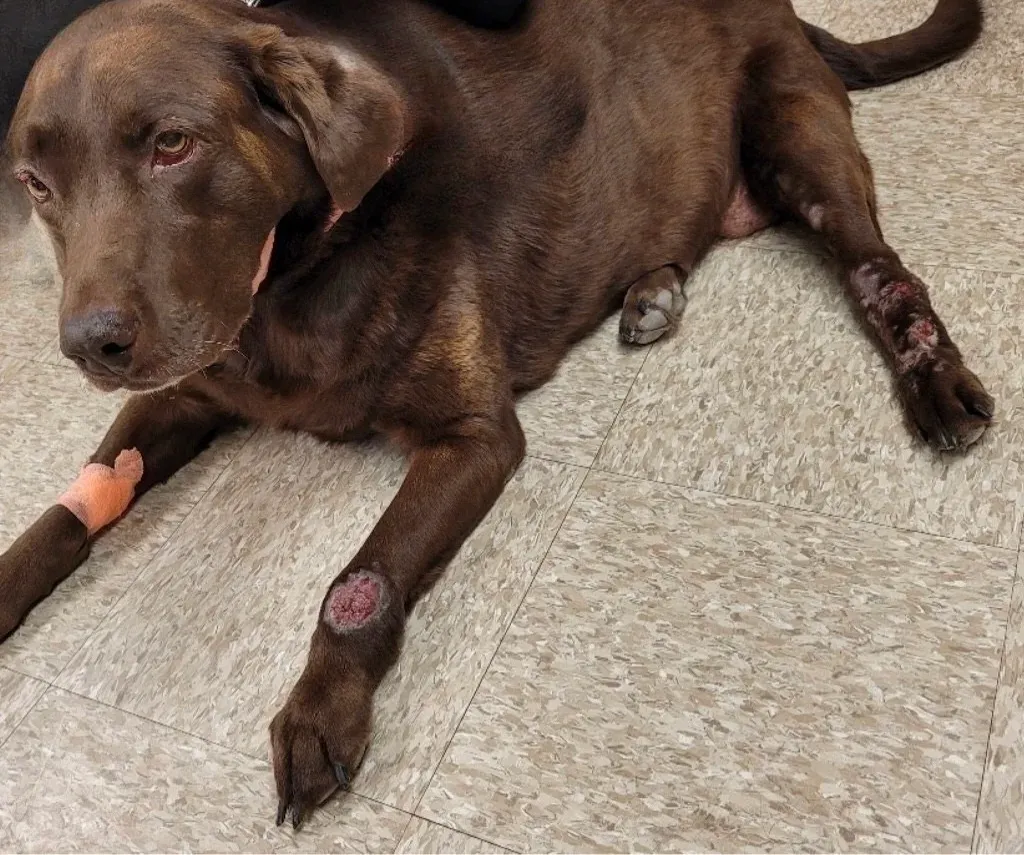
That relentless licking is not just a bad habit — it is a medical emergency in slow motion.
You have probably seen your dog curled up on the couch, methodically licking the same spot on their wrist or ankle for what feels like hours. It looks harmless at first. But that repetitive behaviour is one of the earliest signs of acral lick dermatitis, a chronic and frustrating inflammatory skin disease that accounts for approximately 3 percent of all dermatology cases seen in general veterinary practice [2, 7, 13]. Left unchecked, it does not just stay on the surface.
The problem with lick dermatitis in dogs is that the licking itself makes everything worse. Every time a dog licks a wound, it releases endorphins that soothe discomfort and suppress pain — which rewards the behaviour and drives the dog to do it again and again [1, 7, 13, 14]. Before long, what started as a minor skin irritation becomes a self-perpetuating compulsive cycle that is genuinely difficult to break. The good news is that early recognition and the right treatment plan can stop it in its tracks.
• Acral lick dermatitis accounts for approximately 3 percent of dermatology cases in general veterinary practice [2, 7, 13].
• Chronic licking leads to deep bacterial infections in 94 percent of cases, and up to 50 percent of those infections involve multi-drug resistant organisms [1, 13, 14].• Up to 70 percent of cases have a psychogenic component such as anxiety, boredom, or separation distress [2, 8, 9, 13].
• Large and medium breeds such as doberman pinschers, Labrador retrievers, and golden retrievers are most commonly affected, typically from middle age onwards [1, 2, 7, 8, 9, 13].
• Treatment requires addressing the infection, the inflammation, AND the underlying psychological trigger simultaneously — missing any one of these is the most common reason treatment fails [1, 2, 11, 13].
• Veterinary attention should be sought as soon as obsessive licking results in hair loss or a raised skin sore [1, 6, 7, 9, 13].
Why Compulsive Licking in Dogs Is More Serious Than It Looks
Most owners assume their dog is licking out of boredom or mild discomfort, and sometimes that is true — at first. But once the cycle begins, the skin damage escalates quickly. Chronic licking causes hair follicles to rupture deep within the skin, and when that happens, bacteria gain access to deeper tissue layers, leading to deep bacterial infections in a staggering 94 percent of cases [1, 13, 14]. Half of those infections involve multi-drug resistant organisms, which are significantly harder to treat [14].
What makes this condition so stubborn is the neurological loop it creates. Licking releases endorphins that soothe the dog and suppress pain, meaning the act of licking itself becomes a reward [1, 7, 13, 14]. The dog feels better while licking — so it licks more. The skin breaks down further. The infection deepens. And the emotional relief the dog gets from licking makes it nearly impossible to stop without active veterinary intervention. Understanding this loop is the first step to breaking it.

Warning Signs If Neglected: What a Lick Wound on a Dog Actually Looks Like
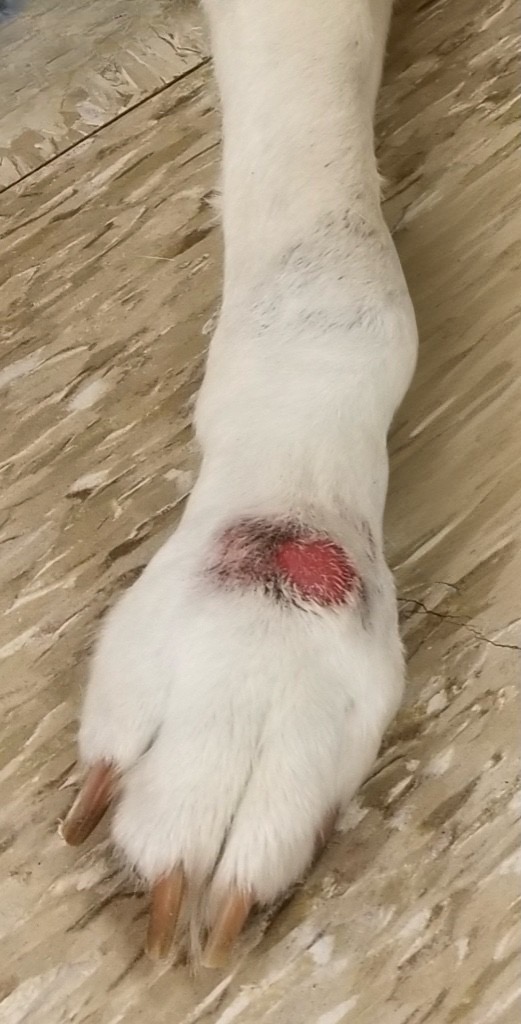
The earliest signs are easy to miss. Owners may first notice a brownish staining of the fur from saliva, or a small patch of localised hair loss on the front or sides of the lower legs [1, 2, 6, 7, 8, 11]. It looks minor. It is easy to dismiss. But without intervention, those early signs give way to something much more visible.
As the condition progresses, the affected area develops into a firm, raised, clearly circumscribed nodule or plaque that may appear red, eroded, or ulcerated [1, 2, 6, 7, 8, 11]. These lesions are sometimes called lick granulomas, and they are the result of the skin's attempt to wall off the chronic damage. The texture becomes almost leathery. The tissue is no longer just inflamed — it has been permanently remodelled by repetitive self-trauma.
Behaviourally, a dog at risk will engage in relentless or compulsive licking and chewing of the wrist or ankle area, particularly while resting in a normal position [2, 8, 9, 13]. This is not occasional grooming. It is focused, repetitive, and difficult to interrupt. If you are seeing this pattern alongside the early physical signs, do not wait — the window for easier treatment is already closing.
Which Dogs Need Extra Attention
While any dog can develop acral lick dermatitis, certain breeds are significantly overrepresented in clinical cases. Large and medium breeds including doberman pinschers, great Danes, Labrador retrievers, German shepherds, golden retrievers, and Weimaraners are among those most commonly affected [1, 2, 7, 8, 9, 13]. If your dog falls into one of these breeds, it is worth knowing the warning signs early.
Age also plays a role. The condition typically develops in middle-aged to older dogs, and when allergies are the inciting cause, onset often occurs after the age of five [1, 2, 7, 8, 9, 13]. Dogs that spend long periods confined, kennelled, or without sufficient social interaction are also at higher risk, as boredom and anxiety are present as contributing psychological factors in up to 70 percent of cases [2, 8, 9, 13].
How Often Should You Be Checking Your Dog?
Given that the early signs of acral lick dermatitis are subtle, owners of at-risk breeds should make a habit of running their hands along their dog's lower legs during routine grooming sessions — checking for salivary staining, hair thinning, or any areas of firmness or sensitivity. On the management side, medicated antimicrobial bathing should be performed two to three times weekly for dogs prone to secondary skin infections, with the product left on for a contact time of 10 to 15 minutes before rinsing [5, 11]. For the psychological component, daily enrichment through physical activity, play, and social interaction is essential — not occasional, but consistent and daily [2, 7, 8, 13].
How to Stop a Dog from Licking a Wound: A Step-by-Step Approach
Managing acral lick dermatitis requires working on several fronts at once. The first priority is physically preventing the dog from continuing to lick. Physical barriers such as Elizabethan collars, basket muzzles, or protective boots must be used to stop self-trauma and allow the skin to begin healing while medical treatments take effect [1, 2, 7, 8, 13]. This step is non-negotiable as most dogs will immediately resume licking the moment the barrier is removed, even if the underlying trigger has been partially addressed [1, 2, 7, 8, 13].
At the same time, the infection needs to be treated aggressively. Treatment typically requires long-term systemic antibiotics for six to eight weeks to fully clear deep infections, combined with topical corticosteroid creams to reduce inflammation and the itch-lick cycle [2, 8, 9, 13]. Stopping antibiotic therapy too early before the deep infection has fully resolved is one of the most common treatment errors, and it frequently leads to recurrence [1, 2, 11, 13]. Your veterinarian may also recommend a deep tissue culture to ensure the antibiotic selected is effective against the specific organisms involved [1, 2, 7, 8, 13].
The third and often most overlooked step is addressing the psychological trigger. Selective serotonin reuptake inhibitors such as fluoxetine, or tricyclic antidepressants such as clomipramine, are used to manage the compulsive licking behaviour [2, 10, 12, 13]. These psychotropic medications require a minimum of four to six weeks to show an effect, and many dogs require indefinite treatment to prevent recurrence [2, 10, 12, 13]. Alongside medication, owners should provide daily environmental enrichment through increased physical activity, social interaction, and play, and should address any sources of anxiety such as restrictive kennelling or lack of companionship [2, 7, 8, 13].

Products and Tools That Support Recovery
Physical barriers are your first line of defence. Elizabethan collars, basket muzzles, and protective boots are the most reliably effective tools for interrupting the licking cycle and protecting healing tissue [1, 2, 7, 8, 13]. Some owners also apply topical substances with an unpleasant taste to the affected area to discourage licking, though these work best when used in combination with other barrier methods rather than as a standalone solution [2, 8, 9, 13].
For secondary infections, antimicrobial medicated shampoos used two to three times weekly with a proper contact time of 10 to 15 minutes can help reduce the incidence of microbial overgrowth in dogs that are prone to recurrent skin infections [5, 11]. Topical corticosteroid creams prescribed by your veterinarian will help address the inflammation and itch that keep the cycle going [2, 8, 9, 13]. Always use these products under veterinary guidance, as inappropriate use can worsen skin integrity over time.
When to See the Vet
Veterinary care should be sought as soon as obsessive licking results in hair loss or the appearance of a firm, raised skin sore [1, 6, 7, 9, 13]. Do not wait to see if it resolves on its own — it will not. Acral lick dermatitis is multifactorial, frequently involves deep tissue damage and infection, and cannot be resolved with home care alone [1, 6, 7, 9, 13].
 Preventive
Your veterinarian will perform skin scrapings to check for mites, cytology to identify bacteria or yeast, and a deep tissue culture to select the correct antibiotic [1, 2, 7, 8, 13]. They may also recommend radiographs of the limb to rule out underlying joint pain or arthritis as a contributing cause, and a skin biopsy if the clinical presentation is unusual or a tumour is suspected [1, 2, 7, 8, 13]. Early diagnosis is not just helpful — it is the single biggest factor in a successful outcome.

Frequently Asked Questions
What is lick dermatitis in dogs and how common is it?
Acral lick dermatitis is a chronic inflammatory skin disease where obsessive self-licking leads to firm, raised lesions on the distal limbs. It accounts for approximately 3 percent of all dermatology cases seen in general veterinary practice, making it a relatively common condition that veterinarians encounter regularly [2, 7, 13].
What causes compulsive licking in dogs?
Compulsive licking in dogs is almost always multifactorial. Psychogenic triggers such as boredom, confinement, and separation anxiety are present in up to 70 percent of cases [2, 8, 9, 13]. However, underlying medical causes including allergies, joint pain or arthritis, and parasites often act as the original inciting trigger before the compulsive behaviour takes over [1, 2, 7, 8, 13]. The act of licking itself then releases endorphins that soothe and reward the dog, reinforcing the cycle regardless of the initial cause [1, 7, 13, 14].
How do you stop a dog from licking a wound or sore?
Stopping a dog from licking a wound requires physical barriers as an immediate first step — Elizabethan collars, basket muzzles, or protective boots are all effective [1, 2, 7, 8, 13]. Most dogs will immediately resume licking if the barrier is removed, even if treatment is underway, so consistent use is essential [1, 2, 7, 8, 13]. Medical treatment for the underlying infection and inflammation, combined with psychotropic medications such as fluoxetine or clomipramine for the compulsive component, is also necessary for lasting resolution [2, 8, 9, 10, 12, 13]. Addressing environmental triggers such as boredom, anxiety, and insufficient exercise is equally important [2, 7, 8, 13].
Can a dog licking a wound make it worse?
Yes — significantly. Chronic licking causes hair follicles to rupture deep within the skin, which leads to deep bacterial infections in 94 percent of cases [1, 13, 14]. Up to 50 percent of those infections involve multi-drug resistant organisms [14]. Additionally, licking releases endorphins that reward and reinforce the behaviour, creating a self-perpetuating compulsive cycle that worsens the skin damage over time [1, 7, 13, 14].
Which dog breeds are most prone to lick dermatitis?
Large and medium breeds are overrepresented in clinical cases. These include doberman pinschers, great Danes, Labrador retrievers, German shepherds, golden retrievers, and Weimaraners [1, 2, 7, 8, 9, 13]. The condition most commonly develops in middle-aged to older dogs, with onset often occurring after age five when allergies are the inciting cause [1, 2, 7, 8, 9, 13].
How long does treatment for a lick granuloma take?
Treatment is not a quick fix. Systemic antibiotics are typically required for six to eight weeks to fully clear a deep skin infection [2, 8, 9, 13]. Psychotropic medications such as fluoxetine or clomipramine need a minimum of four to six weeks before any effect is seen, and many dogs require indefinite treatment to prevent recurrence [2, 10, 12, 13]. Stopping antibiotic therapy too early is one of the most common reasons treatment fails [1, 2, 11, 13].
Acral lick dermatitis is one of those conditions that looks deceptively manageable from the outside — until it is not. The combination of deep tissue infection, compulsive behaviour, and emotional reinforcement makes it one of the more challenging skin conditions in veterinary practice, but it is far from untreatable.
The key is recognising the early signs before the cycle becomes entrenched, getting a thorough diagnosis that accounts for every contributing factor, and committing to a treatment plan that addresses the infection, the inflammation, and the underlying psychological trigger together.
Your dog cannot tell you something is wrong in words — but that relentless licking is telling you everything you need to know. Trust it, act early, and work with your vet to give your dog the relief they deserve.
[1] U of Minnesota Dermatology Handbook Vol. 3, Ch. 14: ALD full diagnostic and treatment chapter (open textbook)
[2] Vets & Clinics: 70% anxiety overlap, primary vs perpetuating factor framework
[3] Loeffler et al. ISCAID 2025: antimicrobial use guidelines for canine pyoderma (PMC open access)
[4] Cornell Riney Canine Health Center: canine atopic dermatitis overview
[5] Merck Vet Manual: canine atopic dermatitis; allergen triggers, diagnosis, treatment
[6] Clinician's Brief: ALD clinical overview, diagnosis and management
[7] VIN Veterinary Partner: prevalence (2.9% of 559 derm cases), causes, prognosis
[8] VCA Animal Hospitals: owner-facing overview, multi-factor causes, treatment
[9] Purdue Vet Hospital: age-of-onset rule, inciting causes
[10] Merck Vet Manual: psychotropic drug classes for ALD
[11] Merck Vet Manual: deep pyoderma in ALD, bacterial classification and treatment
Note: Some of the sources cited here are published by international veterinary authorities and may not be directly accessible from all regions. The reference is provided as a record of where the information comes from. For a clear indication of our editorial policy, please click here.