

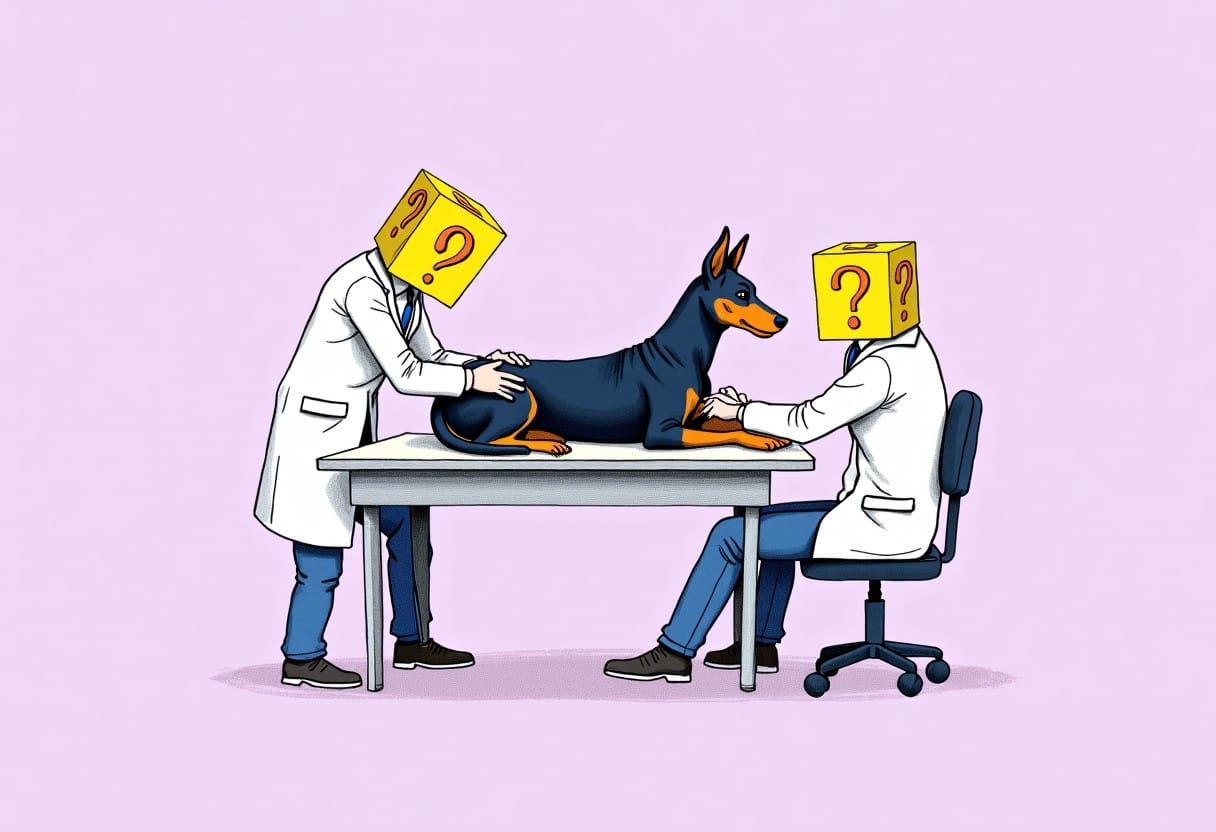
Behind every referral slip lies a question most pet owners never think to ask — until it matters most.
When your pet is unwell, your first call is almost always to your regular vet. But what happens when the diagnosis is complicated, the treatment is not working, or the procedure required goes beyond what your clinic offers? That is the moment many pet owners encounter, for the first time, the layered world of veterinary expertise — and realise they are not entirely sure what the differences mean.

At the broadest level, there are three tiers worth understanding:
- The general practitioner (GP) vet who forms the backbone of everyday pet care
- The veterinarian with a clinical focus who has pursued additional training without achieving formal specialist status
- The board-certified specialist, also called a diplomate, who has completed years of additional residency training and passed rigorous examinations to earn recognition from a certified specialty organisation [3, 9].
Knowing which tier your pet's situation calls for can help you ask better questions, make more informed decisions, and advocate more effectively for your animal's wellbeing.
• A board-certified specialist — known as a diplomate — must complete four years of veterinary college, a one-year internship, and a further two to three years in a recognised residency programme, followed by rigorous examinations [3, 9].
• A veterinary licence is a legal requirement to practise; board certification is entirely optional and represents a higher, self-driven standard of expertise [9].
• Veterinarians who profess a special interest or clinical focus are not necessarily board-certified, and professional guidelines discourage the use of the word 'specialist' unless formal certification has been earned [9].
• The term 'specialist' should be reserved exclusively for veterinarians who have been awarded and currently maintain certification from a recognised specialty organisation [6, 9].
• A referral to a specialist is not a replacement for your GP vet — the Triad of Care model treats it as an extension of primary care, with the owner, GP vet, and specialist all working together [3, 10].
• Pet owners can verify a veterinarian's specialist credentials by looking for designations such as DACVIM after their name, or by consulting the searchable databases of recognised specialty organisations [6, 8, 9].
The Foundation: What Every Vet Has in Common
All practising veterinarians share one thing regardless of their level of additional training: a legal licence to practise. A veterinary licence is a formal requirement for the practice of veterinary medicine and is granted to graduates who pass a licensing examination [9]. Without it, a person cannot legally treat animals in a clinical setting.
What the licence does not do is set a ceiling on ambition. Once licensed, veterinarians are free to continue learning, pursue additional qualifications, and develop clinical interests — or not. The result is a profession with a wide range of expertise operating under the same basic legal credential [9].
For pet owners, this means that two vets with identical licensing may have very different levels of training in a given area.
Graduates of accredited veterinary schools are not legally limited in the scope of their practice and may perform various medical and surgical procedures [4, 9, 10]. Veterinarians are expected to practise based on their own honest assessment of their abilities, and are encouraged to consult with specialists when a case requires equipment or expertise beyond their capacity [4, 9, 10]. That professional self-awareness is, in many ways, one of the most important qualities a good vet can demonstrate.
The General Practitioner: The Vet Most Pets Will See Most Often
Your GP vet is the cornerstone of your pet's healthcare. They are trained across a broad range of species and conditions, and they handle everything from routine vaccinations and wellness checks to first-line diagnosis and everyday medical management. For the vast majority of health concerns, a competent GP vet is exactly what your pet needs.

The GP vet is also your most important navigator. When a case becomes complicated — when a diagnosis is elusive, when treatment is not producing the expected results, or when a procedure requires equipment that a primary care clinic simply does not have — it is usually your GP vet who will identify that a referral is warranted [5, 10]. That referral is not an admission of failure. It is a sign of sound clinical judgement.
In Singapore, the regulatory landscape for veterinary practice is also evolving. The Animal and Veterinary Service (AVS) has proposed new regulations under the new Veterinary Practice Bill that includes continuing professional education (CPE) requirements and the creation of a formal specialist register, which will bring greater structure to how veterinary expertise is recognised and communicated to the public [1].
The Middle Tier: Vets With a Clinical Focus
Between the GP vet and the board-certified specialist lies a meaningful but often misunderstood middle ground, the veterinarian who has pursued additional training and continuing professional development (CPD) in a particular area, without achieving formal diplomate status.
In the United Kingdom, the Royal College of Veterinary Surgeons (RCVS) has formalised this tier through its Advanced Practitioner status. To be accredited, a veterinarian must have been in practice for at least five years and hold a relevant postgraduate qualification [2]. They must also complete 250 hours of CPD over five years, with at least 125 of those hours focused on their designated field [2]. This is a rigorous standard — but it is distinct from full specialist certification.
Veterinarians who advertise a special interest in a specific area — such as surgery or dentistry — are not necessarily board-certified and should not be assumed to be [9]. Professional guidelines actively discourage these veterinarians from using the terms 'specialist' or 'specialising in' unless they have earned formal board certification [9]. This is not a slight against their skill or dedication; it is a matter of clarity for pet owners who deserve accurate information when making decisions about their animal's care.
What Is a Vet Specialist? Understanding Diplomate Status
A board-certified veterinary specialist — referred to as a diplomate — represents the highest formally recognised tier of clinical veterinary expertise. The path to this status is long and demanding. A diplomate must complete four years of veterinary college, a one-year internship or equivalent, and an additional two to three years in a recognised residency programme [3, 5, 9]. Beyond that training, they must pass a series of rigorous examinations set by a recognised certifying organisation [3, 5, 9].

Globally, there are numerous specialty organisations recognised by bodies such as AVMA, EBVS, and ANZCVS, which covers a multitude of distinct veterinary specialties. These specialties span the full breadth of veterinary medicine — from internal medicine, surgery, and cardiology to dermatology, oncology, and emergency critical care [10].
The word 'diplomate' itself carries specific meaning. A legitimately certified veterinarian will identify themselves as a Diplomate of a specific specialty college — for example, a DACVIM is a Diplomate of the American College of Veterinary Internal Medicine — or will explicitly state that they are board-certified in a certain field [6, 9].
Terms such as 'board eligible' or 'board qualified' are considered misleading, because a veterinarian is either board-certified by having met all specialty criteria, or they have no board credentials at all [6, 9].
Once certified, the work does not stop. Specialists must participate in ongoing maintenance of credentials programmes — for example, earning 75 points every ten years for certain internal medicine specialties [5]. In the United Kingdom, specialists are required to reapply every five years and must demonstrate they remain active in their field through publications and the completion of 250 hours of continuing education [7].
The Triad of Care: How the System Is Designed to Work Together
A common worry among pet owners is that asking for a referral to a specialist means abandoning their regular vet — or that it signals a breakdown in the primary care relationship. The Triad of Care model, used in specialty veterinary medicine, addresses this directly.
In this model, a visit to a specialist is treated as an extension of the primary veterinarian's care rather than a replacement [3, 10]. The primary care veterinarian, the board-certified specialist, and the animal owner all communicate and work together to manage the animal's healthcare [3, 10]. The GP vet remains central to the relationship; the specialist provides a targeted layer of expertise for a specific problem.
This collaborative structure matters for practical reasons. Specialists are equipped with sophisticated tools, techniques, and depth of knowledge that primary care clinics often cannot replicate. But they also benefit from the GP vet's longitudinal knowledge of the patient — their history, their temperament, their previous responses to treatment. The best outcomes tend to emerge when both work in concert, with the owner informed and involved throughout.
When Should You Ask for a Referral?
Most pet owners wait for their GP vet to raise the topic of referral — and in many cases, that is entirely appropriate. Your GP vet is best placed to assess when a case has moved beyond the scope of primary care. But it is also reasonable, and indeed encouraged, for owners to ask.
Referral should be considered when an animal's disease is uncommon, complicated, or remains undiagnosed after standard testing [5, 10]. It is also appropriate if current treatment outcomes are not as expected, or if the animal requires sophisticated procedures and specialised equipment not available at a primary care clinic [5, 10].
If you are uncertain about whether a referral is warranted, asking your GP vet directly is always a reasonable step. A good veterinarian will welcome the question and give you an honest assessment of whether specialist involvement is likely to change the outcome for your pet.
How to Verify a Vet's Credentials — and Why It Matters
In a landscape where terms like 'specialist' and 'special interest' are sometimes used interchangeably, knowing how to verify credentials is a practical skill worth having.
A legitimately certified veterinarian will identify themselves as a Diplomate of a specific specialty college or explicitly state they are board-certified in a certain field [6, 8, 9]. Owners can verify these claims by checking the searchable databases of recognised specialty organisations or looking for specific credentials such as DACVIM or DABVP after the veterinarian's name [6, 8, 9].
In Singapore, the proposed Veterinary Practice Bill is expected to establish a formal specialist register, which will make verification more straightforward for local pet owners in the future [1]. Until that register is in place, the guidance above — checking credentials directly with the relevant specialty college — remains the most reliable approach.


The stakes of getting this right are real. When you understand what a vet's credentials actually mean, you are better equipped to ask the right questions, set appropriate expectations, and make decisions that serve your pet's best interests.
Frequently Asked Questions
What is a vet specialist, and how are they different from a regular vet?
A vet specialist — formally known as a diplomate — is a veterinarian who has completed four years of veterinary college, a one-year internship or equivalent, and a further two to three years in a recognised residency programme, and who has then passed rigorous specialty examinations [3, 5, 9]. A regular or GP vet holds a veterinary licence, which is the legal requirement to practise, but has not necessarily completed this additional training [9]. The key distinction is that board certification is an optional, higher-level achievement — a GP vet and a specialist both hold a valid licence, but the specialist has gone substantially further in their formal training within a specific field [9].
How do I know if my vet is a board-certified specialist or just a vet with a special interest?
A board-certified specialist will identify themselves as a Diplomate of a specific specialty college, or will explicitly state they are board-certified — for example, they may have 'DACVIM' or 'DABVP' after their name [6, 8, 9]. Veterinarians who profess a 'special interest' in a particular area are not necessarily board-certified, and professional guidelines discourage the use of the word 'specialist' unless formal certification has been earned [9]. Terms such as 'board eligible' or 'board qualified' are considered misleading — a vet is either board-certified or they are not [6, 9]. You can verify credentials by checking the searchable databases of recognised specialty organisations [6, 8, 9].
When should I ask my vet for a referral to a specialist?
You should consider requesting a referral when your pet's condition is uncommon, complicated, or has not been diagnosed after standard testing [5, 10]. A referral is also appropriate if current treatment is not producing the expected results, or if your pet requires sophisticated procedures or specialised equipment that your primary care clinic does not have [5, 10]. Seeing a specialist does not mean leaving your regular vet behind — the Triad of Care model treats specialist involvement as an extension of primary care, with the GP vet, specialist, and owner all working together [3, 10].
Can a GP vet perform surgery and complex procedures, or do I need a specialist?
Graduates of accredited veterinary schools are not legally limited in the scope of their practice and may perform various medical and surgical procedures [4, 9, 10]. Veterinarians are expected to practise based on their own honest assessment of their abilities, and are encouraged to consult with or refer to specialists when a case requires equipment or expertise beyond their capacity [4, 9, 10]. In short, your GP vet may be well qualified to handle many complex procedures — but for cases that require specialist equipment or depth of expertise, a referral to a diplomate is the appropriate step.
What is the difference between a veterinary specialist and a vet with Advanced Practitioner status?
A board-certified specialist, or diplomate, has completed a recognised residency programme of two to three years after their internship and has passed formal specialty examinations set by a recognised certifying organisation [3, 9]. Advanced Practitioner status, as formalised by the RCVS in the UK, sits below full specialist status and requires at least five years of practice, a relevant postgraduate qualification, and 250 hours of CPD over five years with at least 125 hours in the designated field [2]. It represents meaningful additional expertise and commitment, but it is a distinct and lower tier than full diplomate certification [2, 9].
Navigating the world of veterinary expertise can feel overwhelming, especially when your pet is unwell and decisions need to be made quickly. But the distinctions between a GP vet, a clinically focused vet, and a board-certified specialist are not designed to confuse — they are designed to help you find the right level of care for the right situation.
Your GP vet is your most important partner in that process. Armed with the knowledge of what credentials actually mean, what referral looks like in practice, and how to verify the expertise of any vet you see, you are in a much stronger position to advocate for your animal. Every pet deserves care that matches the complexity of their needs — and every owner deserves the information to make that happen.
[1] AVS Singapore / Veterinary Practice Bill 2025: new formal specialist register being created for Singapore, CPE requirements, Veterinary Council
[2] RCVS Advanced Practitioner status: the formal "clinical focus" tier below specialist — 5yr practice minimum, 250hr CPD, postgrad qualification required
[3] ACVIM Animal Owners page: DVM vs DACVIM explained, training path (4yr vet school + 1yr internship + 2–3yr residency), six ACVIM specialties
[4] VCA: pet-owner explainer on 10 specialist types, board-certified vs GP, when primary care vet refers to specialist
[5] ACVIM FAQs: triad of care (owner–GP–specialist), when owners should request a referral, what an internist specialist does
[6] AVMA policy: how diplomates must identify themselves; defines credential vs informal "specialist" usage; ABVS framework
[7] RCVS Specialist status criteria: diplomate-equivalent in the UK; CPD, peer recognition, active referral practice required
[8] AVMA overview: 22 recognised specialty organisations, 48 distinct specialties, 16,500+ diplomates
[9] AVMA FAQs: what a diplomate is, how board certification works, residency requirements, ABVS recognition process
[10] AVMA pet-owner explainer: all 22 specialist types defined; how board-cert specialists complement GP; referral rationale
Note: Some of the sources cited here are published by international veterinary authorities and may not be directly accessible from all regions. The reference is provided as a record of where the information comes from. For a clear indication of our editorial policy, please click here.