

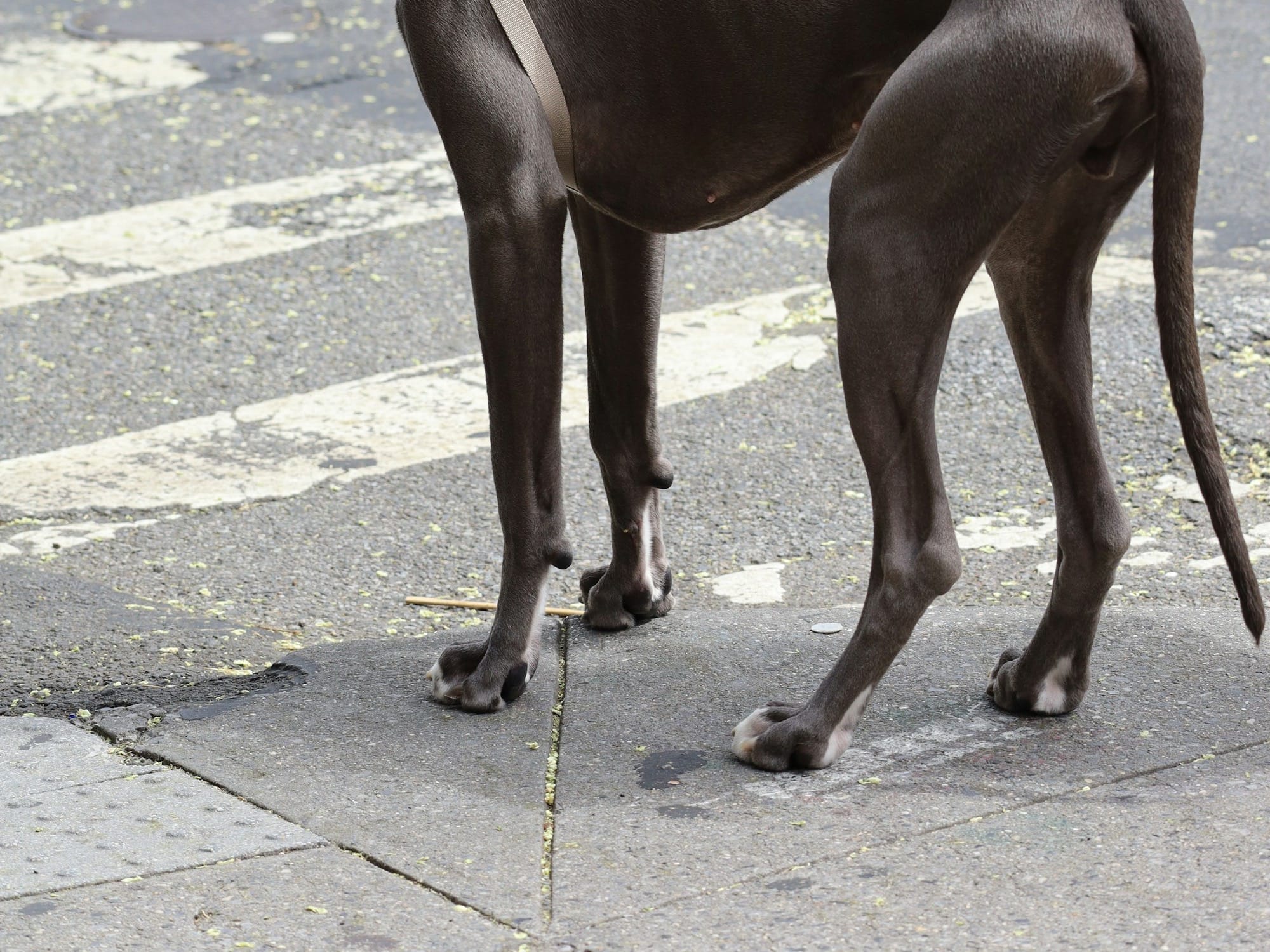
The ground beneath your dog's paws could be scorching even when the air feels fine.
Singapore is hot. That is not news. But here is something that might surprise you: On a typical sunny afternoon, the asphalt your dog is walking on could be nearly 57°C even when the air temperature is only around 30°C [5, 10]. That gap between what you feel and what your dog's paws are experiencing is exactly where injuries happen.
Foot pads are not just tough skin. They absorb shock to protect your dog's bones and joints, provide traction, and insulate against extreme surfaces [2]. When those pads are burned, the consequences can range from painful blistering to full tissue damage and veterinary claims for heat-related illnesses surge by nearly 300 percent during the hottest months of the year [2, 6]. In a country where every month is summer, knowing when and how to protect your dog's paws is essential.
"When air temperature hits 30°C, asphalt can reach 57°C. If you cannot keep your hand on the pavement for 7–10 seconds, it is too hot for your dog. [5, 7, 8, 10]"
• When air temperature reaches 30°C, asphalt can hit approximately 57°C — far too hot for your dog's paws [5, 10].
• If you cannot hold your hand flat on the pavement for 7 to 10 seconds, it is too hot for your dog to walk on [5, 7, 8, 10].
• Walk your dog in the early morning or after 7pm. Avoid 3pm to 5pm in particular, when surfaces are at their hottest [8, 10].
• Burned paw pads look red, swollen, or blistered, and your dog may limp, whimper, or obsessively lick their feet [2, 7, 10].
• Brachycephalic breeds, puppies, small dogs, and dark-coated dogs are at higher risk [4, 5, 8].
• Never use ice or ice-cold water on a suspected burn, instead use cool running water or room-temperature water instead [2, 7].
Why It Matters: How to Tell If the Ground Is Too Hot for Your Dog
Foot pads do a tremendous amount of work. They cushion every step, grip every surface, and act as your dog's primary interface with the ground [2]. When the pavement is dangerously hot, those pads pay the price and because dogs do not communicate pain the way humans do, a burn can progress significantly before most owners even notice something is wrong.
The numbers make the risk stark. When the air temperature is 30°C (86°F), asphalt can reach around 57°C (135°F) [5, 10]. Dark and dense surfaces like the tarmac on Singapore's roads and carpark floors absorb solar radiation and retain it long after the sun has shifted, meaning the ground can stay dangerously hot well into the evening [5, 10]. Heat-related illnesses increase by nearly 300 percent during hotter months, a figure that underscores just how real and common these injuries are [2, 6].
The simplest way to check whether the ground is safe is the hand test. Place the back of your hand flat on the pavement. Sources differ slightly on the duration, some recommend seven seconds [7, 10], while others suggest ten [5, 8], but the principle is the same: If the heat is unbearable for your hand before that time is up, it is far too hot for your dog's paws [5, 7, 8, 10].

Warning Signs If Neglected: Signs of Burnt Paw Pads in Dogs
Pavement burns do not always look dramatic at first. The early signs of a burned paw pad include redness, swelling, or blistering, and you may notice your dog limping, whimpering, or repeatedly licking at their feet [2, 7, 10]. These are signals that something is wrong and that the situation needs attention right away.
Burns are classified by severity. Superficial burns affect only the outermost layer of skin, causing redness and pain [1]. Partial-thickness burns go deeper and cause blistering [1]. The most serious injuries — full-thickness burns — destroy all layers of skin and can actually eliminate the sensation of pain, because the nerve endings themselves have been damaged [1]. In the worst cases, the protective tissue of the pad may peel away entirely, leaving the underlying tissue exposed [2, 7, 10].
If you suspect a burn, the correct immediate response is to soak the affected foot in room-temperature water or hold it under cool running water [2]. Do not use ice or ice-cold water, this can worsen tissue damage [2, 7]. If you apply a bandage at home, wrap it from the toes up to the ankle, making sure it is loose enough to fit two fingers underneath [2]. Bandages must be changed daily to prevent infection, and you should check during each change for signs of compromised circulation or worsening damage [1, 2].
Which Pets Need Extra Attention
All dogs are vulnerable on hot pavement, but some are at significantly greater risk than others. Brachycephalic breeds such as pugs, French bulldogs, and English bulldogs face a double threat: Not only are their paws exposed to the same hot ground as every other dog, but their shortened airways mean they cannot pant effectively enough to dissipate body heat [4, 5, 8]. On a hot Singapore afternoon, this combination can become dangerous very quickly.

Puppies are also particularly susceptible because their paw pads are younger and more sensitive [4, 5]. Small dogs face an additional hazard: Their bodies sit closer to the ground, meaning they absorb more radiant heat from the surface during a walk [4, 5]. Dogs with dark or thick coats are equally at risk, as their coats absorb more heat [4, 5]. It is worth noting that shaving a dog is not the solution, their fur actually acts as insulation that helps regulate body temperature, and removing it can do more harm than good [2, 5, 7].
Best Time to Walk Your Dog in Singapore's Heat
Timing is everything. The single most effective way to protect your dog's paws from hot pavement in Singapore is to rethink when you walk them. Early morning walks before the sun has had time to heat the ground and late evening walks, after the pavement has had a chance to cool, are the safest windows [8, 10]. The specific period to avoid is between 3pm and 5pm, when ground temperatures are typically at their peak [8, 10].
For owners who want to build their dog's tolerance over time, gradual conditioning can help. Walking your dog on pavement during cooler weather helps toughen the pads progressively, building resistance and reducing the risk of blistering when the heat ramps up [5].
How to Protect Your Dog's Paws from Hot Pavement: Step by Step
The first step is always the hand test. Before any walk, press the back of your hand flat against the pavement for seven to ten seconds [5, 7, 8, 10]. If you need to pull your hand away before time is up, turn around and wait for a cooler time of day.
If you need to walk during warmer hours, protective gear is your best line of defence. All-terrain boots or dog shoes with full-foot grip and wrap-around closures create a physical barrier between your dog's pads and the hot ground [5]. Make sure you avoid any foot coverings that adhere directly to the pads, as these can cause additional damage when removed [2, 5, 7]. Pairing boots with a moisturising product formulated specifically for dogs can also help, as dry or cracked pads are more vulnerable to burns in the first place [5].
If an injury does occur, act quickly: Soak the paw in room-temperature water or run cool (not cold) water over it immediately [2]. Wrap the foot from toes to ankle with a bandage that is snug but not tight, you should be able to slide two fingers underneath [2]. Change the bandage daily and monitor closely for signs of infection such as foul odour, moist discharge, or swelling [1, 2].

Products and Tools to Use
When boots are not practical or your dog is still getting used to wearing them, a good-quality canine paw moisturiser is a worthwhile daily addition to your routine. Products made specifically for dogs can keep pads supple and less prone to cracking, and intact, healthy pads are far more resistant to burn injury than dry, fissured ones [5].
When to See the Vet
Some injuries can be managed at home with careful first aid, but others need professional attention without delay. Take your dog to the vet if the pads become discoloured, if the underlying tissue is exposed, or if a wound continues to bleed or has not shown improvement after three days [2]. Signs of infection, including a foul odour, moist discharge, or swelling around the toes are also clear signals that a veterinary visit is needed [2]. When in doubt, it is always safer to call your vet than to wait.
Frequently Asked Questions
When is pavement too hot for dogs in Singapore?
When the air temperature reaches 30°C, asphalt can climb to approximately 57°C [5, 10]. A reliable field test: Press the back of your hand flat on the pavement. If you cannot keep it there for 7 to 10 seconds comfortably, the surface is too hot for your dog's paws [5, 7, 8, 10]. In Singapore's climate, this threshold is typically crossed well before midday on sunny days.
How do I tell if the ground is too hot for my dog?
Use the hand test: Place the back of your hand flat on the pavement for 7 seconds [7, 10], some sources suggest holding it for 10 seconds [5, 8]. If the heat forces you to pull your hand away before that time, the surface is too hot for your dog to walk on safely [5, 7, 8, 10]. Dark asphalt retains heat especially well, so even shaded sections of pavement can be surprisingly hot [5, 10].
What is the best time to walk a dog in Singapore's heat?
Early morning and late evening are the safest windows for walks, as the ground has had time to cool [8, 10]. Avoid the 3pm to 5pm period in particular, when pavement temperatures are typically at their highest [8, 10]. Gradually walking your dog on pavement during cooler weather also helps toughen their pads over time, reducing the risk of burns when temperatures rise [5].
What are the signs of burnt paw pads in dogs?
Look for redness, swelling, or blistering on the pads, and watch your dog's behaviour. Limping, whimpering, or repeatedly licking at the feet are all warning signs [2, 7, 10]. In more serious cases, the pad tissue may peel away and underlying tissue can become exposed [2, 7, 10]. If you notice any of these signs, cool the paw immediately with room-temperature or cool running water and contact your vet [2].
How can I protect my dog's paws from hot pavement?
The most effective options are timing your walks for the early morning or late evening [8, 10], using the hand test before every outing [5, 7, 8, 10], and fitting your dog with all-terrain boots that have full-foot grips and wrap-around closures to create a barrier against hot surfaces [5]. Keeping pads moisturised with a canine-specific product also helps, as dry or cracked pads are more susceptible to burns [5]. Avoid shaving your dog — their coat provides natural insulation that helps with temperature regulation [2, 5, 7].
Singapore's pavements do not announce themselves as dangerous — they just get hot, quietly and fast. The good news is that protecting your dog is genuinely straightforward: Check the ground before every walk, shift your schedule to the cooler parts of the day, and know the warning signs so you can act quickly if something goes wrong.
Your dog trusts you to read the environment they cannot. A quick hand test takes five seconds. Their paws will thank you for it. When in doubt, consult your vet — they are always the best resource for advice specific to your dog's breed, age, and health history.
[1] VCA Animal Hospitals on burns in dogs (classification, first/second/third-degree, treatment, bandaging)
[2] VCA Animal Hospitals on first aid for torn or injured foot pads in dogs
[3] Moon et al. 2021, Frontiers in Veterinary Science, peer-reviewed observational study on environmental heat exposure among pet dogs (urban vs rural)
[4] ASPCA on hot weather safety tips
[5] AKC on how to protect dog paws from hot pavement
[6] University of Georgia College of Veterinary Medicine on summer pet safety (Trupanion claims data, heat stroke thresholds)
[7] MSPCA-Angell on summer safety for pets (paw pad burns at Angell Emergency/Critical Care)
[8] Cornell University College of Veterinary Medicine on summer heat safety tips for dogs (10-second test, sweat-gland physiology)
[9] Tufts Now (Cummings School of Veterinary Medicine) on ten summer tips for pet owners
[10] The Kennel Club (UK) on the danger of hot pavements (seven-second test)
[11] AVMA on warm weather pet safety
Note: Some of the sources cited here are published by international veterinary authorities and may not be directly accessible from all regions. The reference is provided as a record of where the information comes from. For a clear indication of our editorial policy, please click here.