


Your older cat acting like a kitten again? It might not be a good sign.
If your pet shows any of these signs, go to an emergency vet immediately:
• Sudden blindness — high blood pressure from hyperthyroidism can detach the retinas
• Respiratory distress or collapse due to congestive heart failure
• Suspected thyroid storm — a sudden, massive surge in thyroid hormones requiring immediate emergency care
Feline hyperthyroidism is the most common endocrine (hormonal) disorder in middle-aged and older cats, caused by an overproduction of thyroid hormones from an enlarged thyroid gland [3, 6, 8, 9]. This creates a hyperactive metabolic state that affects nearly every organ system in the body, and if left untreated, it is eventually fatal [3, 6, 8, 9]. The cruel irony is that the earliest signs, when a cat that seems energetic, hungry, and full of life, are precisely what lead so many owners to miss it for years.
• Feline hyperthyroidism is the most common hormonal disorder in older cats, most often caused by a benign thyroid tumour called an adenoma [2, 3, 7, 9].
• Early signs include weight loss despite a ravenous appetite, increased thirst, and a deceptive burst of energy that owners often mistake for good health [6, 9, 11].
• The disease can mask underlying chronic kidney disease, making careful monitoring after treatment critically important [1, 8, 9, 11].
• Treatment options range from lifelong daily medication to a single curative injection of radioactive iodine, which succeeds in over 95 percent of cases [3, 5, 9, 11].
• With early diagnosis and proper management, the prognosis is good — with a median survival of up to 5.3 years from the time of diagnosis [3, 9, 11].
• Annual blood and urine tests are recommended for all cats aged 7 and older, as there are currently no known preventive measures [4, 7, 9].
What Is Hyperthyroidism in Cats — and Why Is It So Common in Senior Cats?
Hyperthyroidism occurs when a cat's thyroid gland — a small, butterfly-shaped gland in the neck — goes into overdrive, producing far more thyroid hormone than the body needs [3, 6, 8, 9]. The result is a runaway metabolic state: The heart beats faster, the body burns through calories at an unsustainable rate, and virtually every organ system is pushed past its limits [3, 6, 8, 9].
"Sudden blindness in your cat is a veterinary emergency. High blood pressure caused by untreated hyperthyroidism can detach the retinas — if your cat suddenly loses the ability to see, get to an emergency vet immediately."
In roughly 98 percent of cases, this is caused by a benign tumour called an adenoma — an abnormal but non-cancerous growth on the thyroid gland [2, 3, 7, 9]. Malignant thyroid carcinomas, the cancerous form, account for only about 2 percent of cases [2, 3, 7, 9].
The typical affected cat is an older, mixed-breed cat diagnosed at around 12 to 13 years of age [7, 9]. Interestingly, some breeds appear to develop the disease less frequently than others — Siamese, Burmese, Persian, Abyssinian, Tonkinese, and British shorthair cats all show a decreased incidence compared to the general cat population [7, 9].
Researchers are still working to understand exactly why the disease develops, but potential triggers include nutritional imbalances and chronic exposure to endocrine-disrupting chemicals — particularly flame retardants known as polybrominated diphenyl ethers (PBDEs), which are found in household dust and in fish-based cat foods [2, 3, 7, 9]. This environmental angle has added urgency to research into the disease from a broader public health perspective [2].

Early Signs of Hyperthyroidism in Cats: What Owners Almost Always Miss
The part that makes feline hyperthyroidism so insidious is that in the early stages, your cat may not look sick at all. The earliest signs are often subtle, such as weight loss despite a normal or even voracious appetite, increased thirst, and what appears to be a surprising burst of energy [6, 9, 11]. Many owners describe their senior cat as "acting like a kitten again," not realising that this hyperactive state is actually a symptom of elevated hormone levels rather than a return to good health [6, 9, 11].
As the disease progresses, the picture becomes harder to ignore. Advanced hyperthyroidism produces a visibly debilitated appearance — severe muscle wasting, a scrawny or gaunt frame, and a chronically unkempt, greasy, or matted coat that the cat can no longer maintain [4, 7, 9]. Vomiting and diarrhoea also become common as the gut is affected by the relentlessly elevated hormone levels [4, 7, 9].
The heart and blood pressure are among the most seriously affected systems. Elevated hormones create a high-output cardiac state that thickens the heart muscle and drives up the heart rate, often leading to heart murmurs and, eventually, heart failure [1, 8, 9, 11]. Systemic hypertension — persistently high blood pressure — compounds the damage, threatening the eyes, kidneys, and brain [4, 7, 9].
In the most severe cases, the sudden onset of blindness caused by high blood pressure detaching the retinas, or respiratory collapse from congestive heart failure, signals a genuine emergency [7, 8, 9]. A rare but life-threatening event called a thyroid storm — a massive, rapid surge in thyroid hormones — is also possible and demands immediate veterinary intervention [7, 8, 9].

How Vets Diagnose Hyperthyroidism in Cats
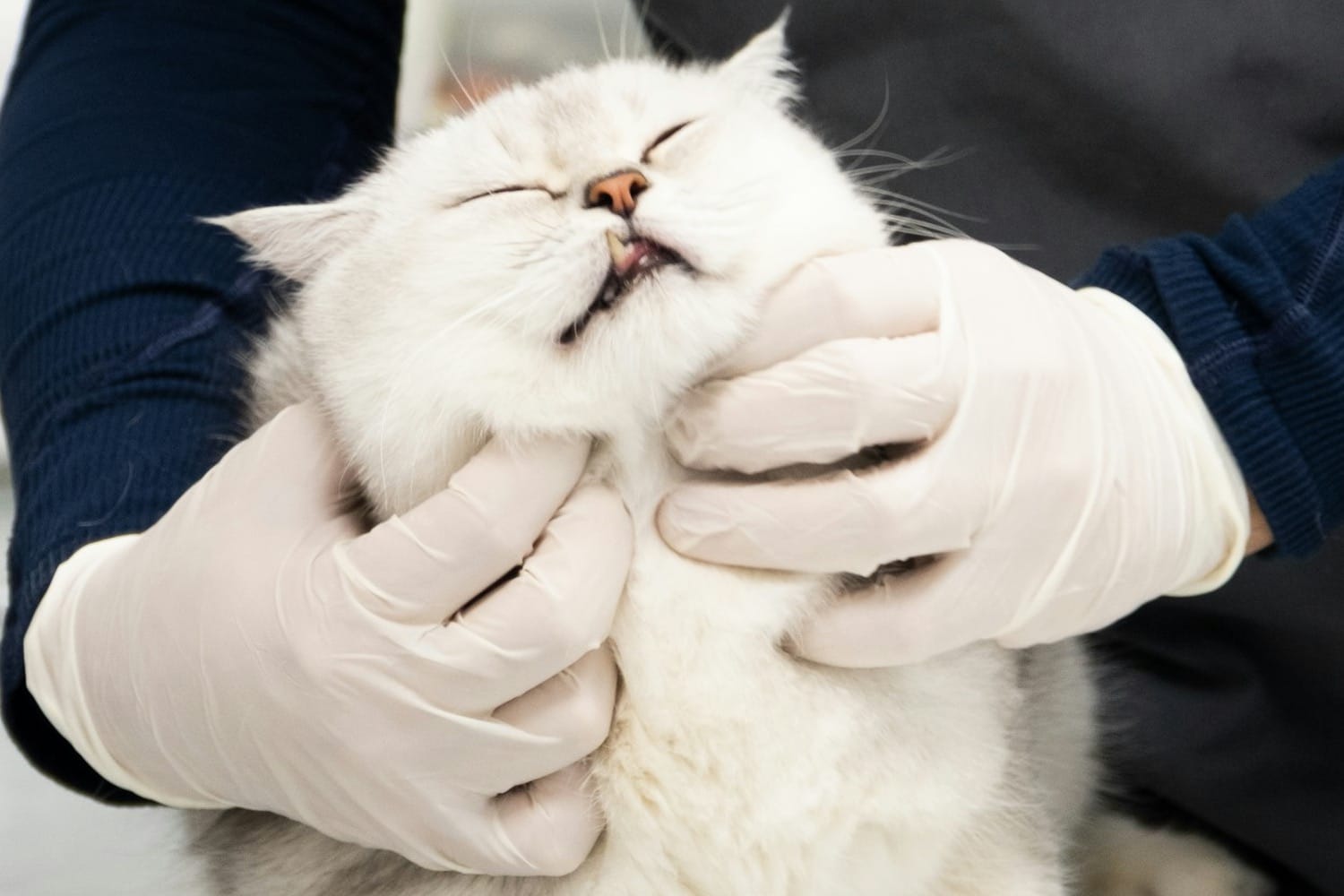
Diagnosis typically begins with a physical examination. A skilled veterinarian will often feel an enlarged thyroid nodule in the cat's neck — a palpable clue that something is wrong with the gland [4, 6, 9, 10]. This finding, combined with the cat's age and clinical signs, usually prompts a blood test to measure serum total thyroxine, or T4 — the primary thyroid hormone circulating in the blood [4, 6, 9, 10]. An elevated T4 level is the cornerstone of diagnosis [4, 6, 9, 10].
However, some cats present with borderline results that fall in a grey zone. For these cases, vets can turn to more sensitive and specialised tests: Free T4 measured by equilibrium dialysis (fT4ed), which is a more precise version of the standard test; TSH (thyroid-stimulating hormone) measurements; or thyroid scintigraphy, a nuclear imaging technique that maps the location and activity of thyroid tissue throughout the body [4, 6, 9, 10]. Each of these tools helps build a fuller picture when the answer is not immediately clear.
One important complication to be aware of at the time of diagnosis is the relationship between hyperthyroidism and kidney disease. The hyperthyroid state artificially increases blood flow to the kidneys, which can temporarily improve kidney function markers and effectively mask chronic kidney disease [1, 8, 9, 11]. This means that a cat may appear to have healthy kidneys at diagnosis, only for underlying kidney damage to become apparent once the thyroid condition is brought under control. Your vet will likely plan to re-evaluate kidney function carefully after treatment begins for precisely this reason [1, 8, 9, 11].
Treatment Options: From Daily Medication to a Curative Injection — Including Methimazole vs Radioactive Iodine
Hyperthyroidism is one of the most manageable serious diseases in senior cats, and owners have several options to choose from depending on their cat's overall health, their own lifestyle, and what is available locally.
The most commonly used approach is lifelong antithyroid medication — drugs such as methimazole or carbimazole that block the thyroid gland from producing excess hormone [8, 9, 11]. These are effective and reversible, meaning that if another health issue arises and you need to pause treatment, the drug can simply be stopped [8, 9, 11]. The trade-off is that these medications must be given daily — often twice daily for the rest of the cat's life, and they require frequent blood tests to ensure the dose is correct and that other organ systems remain healthy [8, 9, 11]. For cats who resist tablets, a transdermal gel formulation that is applied to the inner ear flap offers an alternative delivery method [8, 9, 11].
For cats that cannot tolerate medication or whose owners find the daily pill routine difficult, a prescription iodine-restricted diet (such as Hill's y/d) offers another conservative option. By limiting the dietary iodine that the thyroid needs as a raw material to produce hormones, this diet can normalise thyroid levels within 8 to 12 weeks [4, 6, 9, 11]. The critical catch is that this approach only works if the restricted diet is the absolute only food the cat consumes. No treats, no table scraps, and no outdoor hunting are permitted [4, 6, 9, 11].
For owners seeking a permanent solution, radioactive iodine therapy (I-131) is widely regarded as the gold-standard curative treatment [3, 5, 9, 11]. A single injection of radioactive iodine selectively destroys the abnormal thyroid tissue without surgery or general anaesthesia, and it succeeds in over 95 percent of cases [3, 5, 9, 11]. The significant logistical hurdle is that the cat must be hospitalised in a specialised isolation facility for 3 to 14 days after treatment, until radiation levels in the body have dropped to a safe level [3, 5, 9, 11].
Surgical removal of the thyroid glands — thyroidectomy — is another curative option that eliminates the need for lifelong medication [6, 7, 11]. However, it requires general anaesthesia, which carries added risk for senior cats with pre-existing heart problems, and there is a danger of accidental damage to the parathyroid glands — small glands adjacent to the thyroid that regulate calcium levels — which can cause life-threatening calcium imbalances [6, 7, 11].

Long-Term Management and Monitoring
Successfully treating hyperthyroidism is the beginning of an ongoing monitoring relationship with your vet. Regular blood work every 3 to 6 months is required to check thyroid hormone levels, kidney function, and blood pressure, ensuring the cat remains stable and within a healthy hormonal range [3, 9, 11].
The reason kidney monitoring matters so much post-treatment goes back to the masking effect described earlier. Because the hyperthyroid state was artificially propping up kidney function, some cats will show a decline in kidney markers once treatment brings thyroid levels down — revealing chronic kidney disease that was hidden all along [1, 8, 9, 11]. This does not mean treatment was a mistake; it means your vet will need to balance thyroid management carefully alongside kidney support.
With early detection and consistent management, the long-term outlook is genuinely encouraging. The prognosis is generally good, with a median survival of up to 5.3 years from the time of diagnosis for well-managed cats [3, 9, 11]. Routine wellness screening — annual blood and urine tests for all cats aged 7 and older, combined with bi-annual physical examinations to check for thyroid enlargement and subtle behavioural changes — gives your cat the best possible chance of an early diagnosis [4, 7, 9]. As there are currently no known preventive measures, that screening is the single most powerful tool available [4, 7, 9].
Frequently Asked Questions
What are the symptoms of cat hyperthyroidism?
Symptoms range widely depending on how advanced the disease is. Early signs include weight loss despite a ravenous appetite, increased thirst, and a perceived boost in energy that owners often mistake for good health [6, 9, 11]. As the disease progresses, cats develop visible muscle wasting, a scrawny appearance, and an unkempt or greasy coat [4, 7, 9]. Vomiting, diarrhoea, heart murmurs, and high blood pressure affecting the eyes, kidneys, and brain are all associated with advanced disease [4, 7, 9]. Emergency signs — sudden blindness, breathing difficulties, or collapse — require immediate veterinary care [7, 8, 9].
What are the early signs of hyperthyroidism in cats?
The earliest signs are deceptively benign-looking: Unexpected weight loss despite a good or even increased appetite, greater thirst than usual, and a seemingly energetic or hyperactive demeanour [6, 9, 11]. Many owners interpret this phase as their senior cat enjoying a second wind of youth, when in fact the elevated thyroid hormones are driving the hyperactive state [6, 9, 11]. Because these signs are so easy to attribute to normal ageing, the disease is frequently missed in its early stages.
Why is my senior cat losing weight but eating more?
A senior cat that is losing weight despite eating normally or even eating more than usual is a classic presentation of hyperthyroidism [6, 9, 11]. The overactive thyroid gland causes the body to burn through calories at an abnormally high rate, meaning the cat cannot consume enough food to keep pace with its own metabolism [3, 6, 8, 9]. This combination of weight loss and increased appetite in a cat aged 7 or older is a strong reason to book a veterinary appointment promptly — a simple blood test can confirm or rule out the disease.
What is the difference between methimazole and radioactive iodine for cats with hyperthyroidism?
Methimazole (and the related drug carbimazole) is a daily oral or transdermal antithyroid medication that blocks hormone production [8, 9, 11]. It is reversible and widely accessible, but must be given for the rest of the cat's life and requires regular blood monitoring [8, 9, 11]. Radioactive iodine (I-131), by contrast, is a single curative injection that destroys the abnormal thyroid tissue without surgery or anaesthesia, succeeding in over 95 percent of cases [3, 5, 9, 11]. Its main practical drawback is a mandatory hospitalisation of 3 to 14 days in a specialist isolation facility after treatment [3, 5, 9, 11]. The best choice depends on your cat's overall health, your circumstances, and what is available near you — your vet is best placed to advise.
Can hyperthyroidism in cats be cured?
Yes — both radioactive iodine therapy and surgical thyroidectomy are considered curative treatments [3, 5, 6, 7, 9, 11]. Radioactive iodine has a success rate of over 95 percent and does not require surgery [3, 5, 9, 11]. Surgery is also effective and eliminates the need for lifelong medication, though it carries anaesthetic risks in older cats and the potential for damage to the adjacent parathyroid glands [6, 7, 11]. Daily medication and iodine-restricted diets are effective management tools rather than cures, as they control rather than eliminate the underlying condition [8, 9, 11].
What is the life expectancy of a cat with hyperthyroidism?
With early diagnosis and proper management, the prognosis is generally good. Research shows a median survival of up to 5.3 years from the time of diagnosis for cats that are appropriately treated [3, 9, 11]. Long-term management requires blood work every 3 to 6 months to monitor thyroid levels, kidney function, and blood pressure [3, 9, 11]. Left untreated, however, the disease is eventually fatal [3, 6, 8, 9].
• My senior cat has been losing weight but still eating well, so could this be hyperthyroidism, and what tests would you recommend?
• Given my cat's age and heart health, which treatment option, daily medication, radioactive iodine, or surgery, would you consider most appropriate?
• How often should we recheck thyroid levels and kidney function after starting treatment, and what numbers are we aiming for?
• Is there a risk that treating the hyperthyroidism will unmask kidney disease, and how will we manage that if it happens?
• Are there any dietary changes I should make while my cat is being treated for hyperthyroidism?
• At what point would you recommend escalating from medication to a curative treatment such as radioactive iodine?
Feline hyperthyroidism is one of those conditions that hides in plain sight — disguised as an energetic older cat, a good appetite, or just the ordinary signs of ageing. But with awareness of the early warning signs, routine screening for cats aged 7 and older, and the genuine range of effective treatment options now available, this is a disease that can be caught, managed, and in many cases cured.
If something about your senior cat feels subtly off, or even suspiciously, unusually good. trust that instinct and speak to your vet. A simple blood test could add years to your cat's life.
[1] Cardiac Abnormalities in Feline Hyperthyroidism (Vet. Sci. 2025, peer-reviewed, MDPI open access)
[2] Environmental Implications of the Global Prevalence of Hyperthyroidism in Cats from a "One Health" Perspective (peer-reviewed, MDPI open access, 2025)
[3] Feline Hyperthyroidism, Cornell University College of Veterinary Medicine (vet school)
[4] Hyperthyroidism in Animals, Merck Veterinary Manual (Endocrine System chapter)
[5] Hyperthyroidism in Cats, MSPCA-Angell (Boston teaching hospital)
[6] Hyperthyroidism in Cats, Cornell Feline Health Center (vet school owner-facing guide)
[7] Hyperthyroidism in Cats, VCA Animal Hospitals (national clinic chain clinical guide)
[8] Hyperthyroidism in Cats — Two FDA-Approved Drugs Available to Treat It, US FDA
[9] 2016 AAFP Guidelines for the Management of Feline Hyperthyroidism (Carney et al., J Feline Med Surg, peer-reviewed)
[10] 2023 AAHA Selected Endocrinopathies of Dogs and Cats Guidelines
[11] Hyperthyroidism (2025), Cats Protection UK (vet-reviewed charity guide)
Note: Some of the sources cited here are published by international veterinary authorities and may not be directly accessible from all regions. The reference is provided as a record of where the information comes from. For a clear indication of our editorial policy, please click here.