


The antibiotic-resistant infection hiding in plain sight — and why your pet's skin could be the first warning sign.
If your pet shows any of these signs, go to an emergency vet immediately:
• Signs of bacteraemia or sepsis — such as a rapidly worsening skin infection that has been left untreated — require immediate veterinary attention.
• In pet birds, an acute tracheal infection causing breathing obstruction is a medical emergency that may require placement of an air sac tube.
Methicillin-resistant Staphylococcus aureus — better known as MRSA — is not just a human hospital problem. It can affect your dog, your cat, and even your pet bird, and because it resists most common antibiotics, it is significantly harder to treat than an ordinary skin infection. There is also a closely related pathogen called Methicillin-resistant Staphylococcus pseudintermedius, or MRSP, which is actually more common in pets and can cause serious skin, ear, and soft tissue disease [1, 6, 12]. Understanding the difference between the two, knowing what to watch for, and acting quickly can make all the difference for your pet's recovery.
• MRSA and MRSP are antibiotic-resistant bacteria that can cause serious infections in dogs, cats, and other pets. MRSP is the more common culprit in companion animals, while MRSA typically originates from human contact [1, 6, 12].
• Resistance is driven by the mecA or mecC genes, which allow the bacteria to survive most beta-lactam antibiotics — including penicillin and cephalosporins — that vets would normally reach for first [1, 6, 12].
• Early signs look deceptively mild: small pimples, redness, scabs, and patchy hair loss that cause your pet to scratch. Left untreated, infections can deepen and even enter the bloodstream [5, 9, 10].
• Accurate diagnosis requires bacterial culture and sensitivity testing — a visual examination alone cannot distinguish a resistant infection from a regular one [4, 7, 10].
• Most MRSA infections in pets are treatable when caught early, and healthy pets often clear the bacteria on their own within weeks to months once the source is identified and addressed [5, 7, 12].
• MRSA poses a genuine two-way transmission risk between pets and people, while MRSP rarely causes actual infection in humans — though it can briefly colonise them [6, 10, 12].
What Are MRSA and MRSP? Understanding Antibiotic-Resistant Staph in Pets
MRSA and MRSP belong to a group of Gram-positive, coagulase-positive bacteria that have acquired resistance to nearly all beta-lactam antibiotics — the broad family that includes penicillin, amoxicillin, and most cephalosporins [1, 6, 12]. What makes them so difficult to treat is not some exotic biological trick because it comes down to two genes. The mecA and mecC genes, carried on a mobile genetic element called the staphylococcal chromosomal cassette mec (SCCmec), encode an altered protein called PBP2a. This altered protein has a low affinity for beta-lactam drugs, which means the bacteria can keep building their cell walls even when antibiotics are present [1, 6, 12].
Although they are often mentioned in the same breath, MRSA and MRSP are quite different in how they relate to pets. Staphylococcus aureus is fundamentally a human bacterium — it is host-adapted to people and only colonises pets sporadically, usually after close contact with an infected owner [1, 6, 12]. Staphylococcus pseudintermedius, on the other hand, is a primary commensal bacterium, meaning it naturally lives on the skin and mucous membranes of dogs and cats as part of their normal microbiome. MRSP is therefore the more common cause of resistant infections in companion animals [1, 6, 12].
In terms of which pets are most affected, dogs bear the greatest burden of MRSP-related disease, particularly skin, ear, and soft tissue infections. Colonisation rates for MRSA in healthy community-dwelling dogs and cats are generally low — ranging from 0% to 4% — but can rise to between 7% and 11% in pets admitted to veterinary hospitals [1, 6, 12]. This matters because hospitalisation itself is a recognised risk factor, and pets that have recently had surgery or received multiple courses of antibiotics are particularly vulnerable [5, 6, 10, 12].
Risk Factors: Which Pets Are Most Vulnerable?
No pet is completely immune, but certain situations dramatically increase the odds. For any pet, repeated courses of antimicrobials, chronic skin disease, prior hospitalisation, and surgery — especially procedures involving indwelling medical implants — are all established risk factors [5, 6, 10, 12]. Eery antibiotic course puts selective pressure on bacteria, nudging resistant strains to survive and multiply.
For MRSA specifically, the biggest single risk factor is direct contact with an infected human. Kissing, licking, and sharing a bed with an owner who carries MRSA are all meaningful routes of transmission [5, 6, 10, 12]. Research also suggests that purebred animals and those with short coats may be more likely to be colonised, though every pet is different and colonisation does not automatically mean the animal will develop an infection [5, 6, 10, 12].

Pet birds and rabbits are not immune either. MRSA has been isolated from cases of pododermatitis (commonly known as bumblefoot) in birds [3, 11, 12]. Methicillin-resistant staphylococci, including isolates carrying the mecC gene, have also been identified in pet rabbits and can occasionally cause purulent — that is, pus-producing — skin conditions in these species [3, 11, 12].
Signs to Look Out For: From Early Skin Sores to Serious Infection
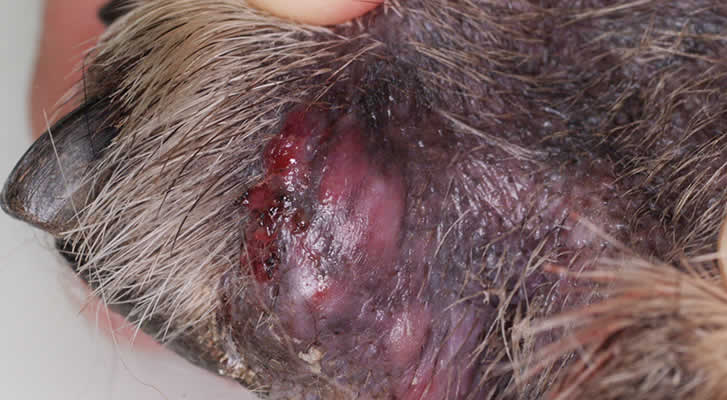
One of the most frustrating aspects of MRSA and MRSP is how unremarkable the early signs look. Owners may first notice subtle skin changes like redness, small pimples or pustules, scabs, dander, and patches of hair loss [5, 9, 10]. These early symptoms of pyoderma — a bacterial skin infection — often cause the animal to itch persistently, and they are frequently associated with uncontrolled allergic skin disease [5, 9, 10]. It is easy to write off as a minor flare-up, which is exactly why so many cases progress further than they should.
As the infection deepens, the clinical picture changes significantly. Hallmarks of deep infection in dogs include noticeable pain, an unpleasant odour, and the exudation of blood and pus [9]. Advanced cases may present with swelling, ulcerations, haemorrhagic crusts, and draining tracts — tunnels in the skin through which fluid escapes — that commonly develop on the muzzle, chin, elbows, or between the toes [9].
The most serious concern is what happens when bacteria are not stopped at the skin. If a skin infection is left untreated, the bacteria can penetrate the dermis and enter the bloodstream, leading to bacteraemia or sepsis — both of which are potentially life-threatening conditions [4, 12]. In pet birds, an acute tracheal infection that causes a blockage is a medical emergency; the bird may require the immediate placement of an air sac tube to allow it to breathe [3, 4, 12]. These scenarios represent the extreme end of the spectrum, but they underscore why early intervention matters.

How Vets Diagnose Antibiotic-Resistant Staph Infections in Pets
A crucial point that many owners do not realise is that a resistant staph infection looks exactly the same as a susceptible one. There is no visual shortcut. That is why veterinarians cannot rely on physical examination alone and must use laboratory testing to make an accurate diagnosis [4, 7, 10].
The process typically starts with cytology — microscopic examination of cells taken from the infected site to identify inflammatory cells and confirm the presence of bacteria [4, 7, 10]. From there, a bacterial culture is performed to identify the specific strain involved. Culture and sensitivity testing usually takes one to three days and is necessary both to detect the presence of the mecA gene — the primary marker of methicillin resistance — and to determine which antibiotics will actually be effective against that particular isolate [4, 7, 10].
This waiting period can feel frustrating when your pet is clearly uncomfortable, but starting treatment without culture results risks making the situation worse by using a drug that will not work. Consult your vet about whether any interim supportive care — such as topical treatment — is appropriate while results are pending.

How to Treat MRSP Skin Infections in Dogs and Cats: From Topical Therapy to Last-Resort Options
Treatment is deliberately tiered, starting with the least invasive options and escalating only when necessary. For localised surface infections, conservative topical therapy is often the first port of call. Medicated shampoos containing 2% to 4% chlorhexidine or benzoyl peroxide are applied two to three times weekly, with a contact time of 10 to 15 minutes to allow the active ingredients to work [7, 9, 10]. Local wound management — such as lancing and flushing an abscess — is also frequently effective for surface infections and can reduce the need for systemic antibiotics [7, 9, 10].
When systemic antibiotics are needed for animals with no known history of methicillin resistance, first-tier oral options include clindamycin, first-generation cephalosporins such as cephalexin, and amoxicillin-clavulanate [9, 12]. Importantly, simple penicillin, ampicillin, or plain amoxicillin should be avoided empirically — that is, without culture confirmation — because many staph strains produce an enzyme called beta-lactamase that renders these drugs ineffective [9, 12]. Of course, for confirmed MRSA or MRSP cases, the culture and sensitivity results will guide which antibiotic is actually appropriate.
For severe or non-resolving infections, treatment can become considerably more intensive. Hospitalisation in an isolation suite — where staff wear dedicated gowns and gloves to prevent cross-contamination — may be necessary [6, 7, 12]. In cases involving infected orthopaedic implants, surgical removal of the device may be required [6, 7, 12]. In the most extreme situations, veterinarians may consider last-resort human antibiotics such as vancomycin or linezolid, though their use in veterinary medicine is highly controversial given concerns about preserving these drugs for human medicine [6, 7, 12].
Prognosis and Home Management: What to Expect
The outlook for a pet diagnosed with MRSA is generally positive when the infection is caught and treated promptly. One study found a 92% discharge rate for infected dogs, which is an encouraging figure [5, 7, 12]. Healthy pets often clear MRSA colonisation on their own within a few weeks to a few months, provided the source of the bacteria — whether an infected human household member or a contaminated environment — is identified and addressed [5, 7, 12].
At home, strict hygiene is essential during and after treatment. Owners should wash their hands thoroughly before and after handling the pet, wear gloves during any wound care, and launder pet bedding daily [6, 7, 10]. The pet should be kept off human beds and pillows during the recovery period, and high-touch surfaces such as doorknobs and food bowls should be disinfected at least once a day [6, 7, 10]. These steps protect other household members and reduce the chance of re-infection.
Can Pets Transmit MRSA to Humans? Understanding the Zoonotic Risk
The short answer is yes — but the risk differs significantly between MRSA and MRSP. MRSA is a true two-way zoonotic pathogen, meaning it can travel in both directions between pets and people. Transmission most often flows from humans to pets — a process called reverse zoonosis — but once a pet is colonised, it can then serve as a reservoir and re-infect the people around it [6, 10, 12]. This cycle is one of the key reasons why treating an infected household member and the pet simultaneously is so important.
MRSP presents a very different zoonotic picture. Because it is host-adapted to dogs and cats, it can transiently colonise human skin — meaning it can be present without causing harm — but actual MRSP infections in people are considered rare [6, 10, 12]. Still, basic hygiene precautions remain sensible regardless of which strain is involved, particularly for immunocompromised individuals, the elderly, or young children who may be more susceptible.
If someone in your household has a known MRSA infection and your pet develops skin problems, mention this to your vet. The connection matters for diagnosis, treatment planning, and protecting everyone in the home.

Frequently Asked Questions
What is the difference between MRSP and MRSA in pets?
Both are antibiotic-resistant staph bacteria, but they differ in their relationship to animals. MRSA (Methicillin-resistant Staphylococcus aureus) is fundamentally a human bacterium that only colonises pets sporadically, almost always after contact with an infected person [1, 6, 12]. MRSP (Methicillin-resistant Staphylococcus pseudintermedius) is a natural resident of dog and cat skin, making it the far more common cause of resistant infections in companion animals — particularly skin, ear, and soft tissue infections in dogs [1, 6, 12]. Both types resist beta-lactam antibiotics through the same mecA or mecC gene mechanism [1, 6, 12].
What are the signs of an antibiotic-resistant staph infection in dogs?
Early signs are easy to miss: redness, small pimples or pustules, scabs, dander, and patchy hair loss that cause itching, often linked to underlying allergic skin disease [5, 9, 10]. As the infection progresses, you may notice pain, an unpleasant odour, and discharge of blood or pus [9]. In advanced cases, dogs can develop swelling, ulcerations, haemorrhagic crusts, and draining tracts on the muzzle, chin, elbows, or between the toes [9]. Because resistant infections look identical to non-resistant ones, only a laboratory culture can confirm the diagnosis [4, 7, 10].
Can pets transmit MRSA to humans?
Yes. MRSA is a genuine two-way zoonotic pathogen. It commonly travels from infected humans to pets (reverse zoonosis), but once a pet is colonised, it can serve as a reservoir and re-infect the people in the household [6, 10, 12]. MRSP is a different story — while it can transiently colonise human skin, actual infections in people are considered rare [6, 10, 12]. Regardless of which strain is involved, thorough handwashing, wearing gloves during wound care, and keeping the pet off human beds are all recommended precautions [6, 7, 10].
How do you treat an MRSP skin infection in dogs?
Treatment starts conservatively with topical medicated shampoos containing 2% to 4% chlorhexidine or benzoyl peroxide, applied two to three times weekly with 10 to 15 minutes of contact time [7, 9, 10]. Local wound management such as lancing and flushing an abscess can be effective for surface infections [7, 9, 10]. If systemic antibiotics are required, the choice must be guided by culture and sensitivity results — empirical use of plain penicillin, ampicillin, or amoxicillin is generally ineffective against staph strains that produce beta-lactamase [9, 12]. Severe cases may require hospitalisation in isolation, surgical removal of infected implants, or in extreme situations, last-resort human antibiotics like vancomycin or linezolid [6, 7, 12].
What is the prognosis for a dog with MRSA?
The prognosis is generally good when infection is caught early. One study reported a 92% discharge rate for dogs diagnosed with MRSA infection [5, 7, 12]. Healthy pets frequently clear MRSA colonisation on their own within a few weeks to a few months, provided the original source of bacteria — such as an infected human household member or a contaminated environment — is identified and removed [5, 7, 12]. Prompt diagnosis and strict home hygiene are key to a successful outcome.
Are pet birds and rabbits at risk from methicillin-resistant staph?
Yes, though documentation is less extensive than for dogs and cats. MRSA has been isolated from pet birds with pododermatitis, commonly known as bumblefoot [3, 11, 12]. Methicillin-resistant staphylococci — including isolates carrying the mecC gene — have also been found in pet rabbits and can occasionally cause purulent (pus-producing) skin conditions in these species [3, 11, 12]. In birds, a severe tracheal infection causing a breathing blockage is a medical emergency requiring immediate veterinary attention [3, 4, 12].
• Should my pet have a bacterial culture and sensitivity test before starting any antibiotic, given their history of skin infections?
• Which topical treatments do you recommend for managing my pet's skin infection at home, and how often should I apply them?
• If someone in my household has a MRSA infection, should my pet be screened even if they appear healthy?
• How will we know when the infection has fully cleared, and is a follow-up culture necessary before stopping treatment?
• Are there any underlying conditions — such as allergies or hormonal disease — that could be making my pet more susceptible to recurring staph infections?
• What isolation or hygiene measures should I put in place at home to protect other pets and family members during treatment?
A resistant staph infection is genuinely daunting news, but it is far from a worst-case scenario when addressed early and systematically. Most pets recover well, and with the right combination of accurate diagnosis, targeted treatment, and diligent home hygiene, even the most stubborn MRSA or MRSP infection can be brought under control.
The key is not to wait — if you notice persistent itching, unusual skin lesions, or sores that are not improving with standard treatment, speak to your veterinarian promptly. Catching this early gives your pet the best possible chance of a full recovery and keeps everyone in your household safer.
[1] MDPI Antibiotics: MRSA/MRSP resistance characterisation, mecA/mecC, oxacillin testing
[2] Cornell Feline Health Center: what MRSA is, colonisation vs infection in cats
[3] Merck Vet Manual: staph and MRSA in pet birds, pododermatitis
[4] Texas A&M TVMDL: pyoderma diagnosis and progression to bacteraemia
[5] Ohio State: MRSA in dogs/cats/birds, breed predisposition, symptoms, screening
[6] Today's Veterinary Practice: colonisation rates, screening protocol, host adaptation
[7] VIN Veterinary Partner: MRSA risk factors, culture diagnosis, treatment, colonisation clearance
[8] ASM J Clin Microbiol: MRSP multidrug-resistance profile, veterinary teaching hospital
[9] Merck Vet Manual: pyoderma clinical signs, surface/superficial/deep, diagnosis, treatment
[10] Texas A&M VMBS: MRSA vs MRSP, pyoderma signs, risk factors
[11] PLOS ONE: zoonotic MDR staph carriage in dogs, cats and rabbits
[12] Iowa State CFSPH MRSA factsheet: disease summary, host range, transmission, prevention
Note: Some of the sources cited here are published by international veterinary authorities and may not be directly accessible from all regions. The reference is provided as a record of where the information comes from. For a clear indication of our editorial policy, please click here.